
Return of Godzilla/Godzilla 1985 ~ 1984, Koji Hashimoto (Japan)/1985 R.J. Kizer (USA)
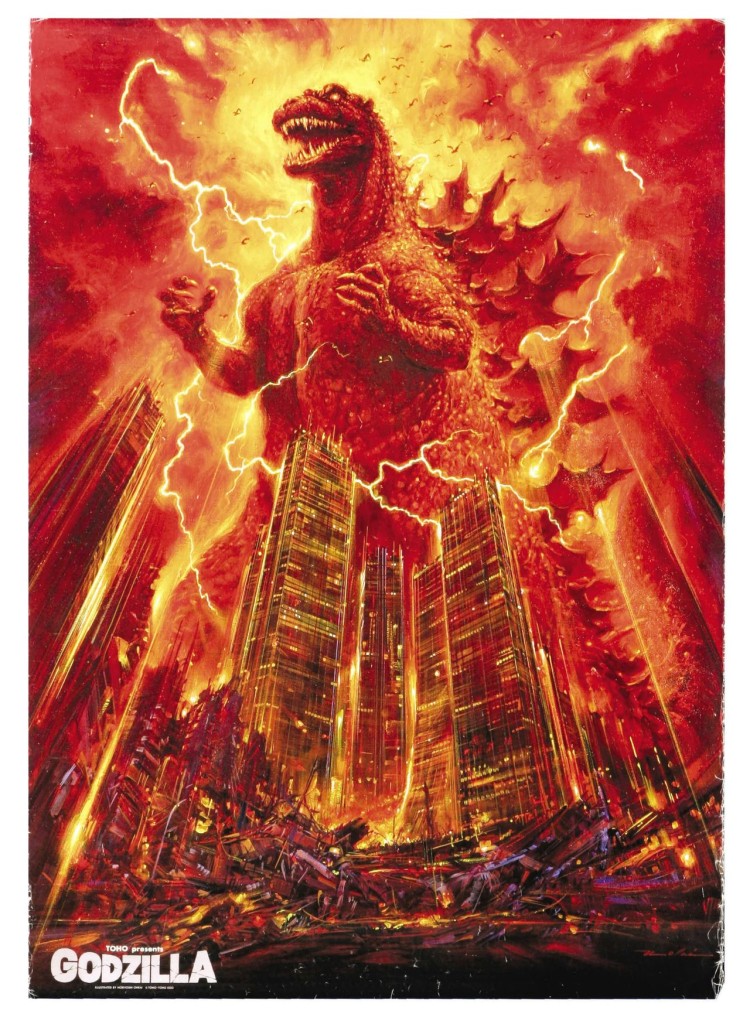
After a nine year break, Toho returns with a full on reboot of the Godzilla franchise that ignores a whopping twenty years worth of movie continuity, which isn’t a problem, because ignoring continuity is something Toho has always been excellent at anyway. This time around, we acknowledge only 1954’s Gojira as cannon, and begin with a brand new storyline which would later become known as the Heisei series. Because we’ve taken thirty or so movies and completely thrown them in the trash, we’ve erased Godzilla’s transformation into the grumbling, heroic Guardian monster he had grown into in his later films, and so the monster we see now is again painted more as a horrible, planet-wide menace that must be destroyed. This movie is super, super grim, and when you look at our last dozen outings with Big G, this couldn’t be a more different experience. At the same time, however, because this is still an accurate continuation of the original Godzilla concept, and because previous films have also proven that there is enough room within the Godzilla format for more than one idea, this dramatic shift in tone does not make Return of Godzilla feel like an illegitimate sequel. It still works just fine.
THE PLOT~ Thirty years after the original Godzilla monster attacked Japan and was subsequently destroyed, a second, identical monster surfaces in the Pacific Ocean and starts smashing boasts and killing people. Japan becomes aware of the situation almost immediately, but chooses to suppress this information for fear of causing unnecessary panic amongst the already tense Global Political Stage. Soon, however, they have no choice, as Godzilla strikes down a Soviet Nuclear Submarine and causes a heated international incident. Assuming that only the United States could have been behind the attack on their submarine, the Soviet Union threatens to escalate this situation to full scale nuclear warfare, and Japan is forced to announce the existence of Godzilla as a means of diffusing the situation. This only brings Japan’s government new pressures from both the Americans and the Russians in regards to how to handle this big green bastard and his boat smashin’ ways, and everybody gets super stressed out. The rest of the picture balances Japan’s war with Godzilla and their deep seeded abhorrence of Nuclear weapons with cold war tensions and international bickering, making this film an effective means of addressing where the Nuclear Discussion had moved to in the mid 1980’s. That feels pretty appropriate, given Godzilla’s atomic bomb history, but we also see a lot of Godzilla thrashing about and being shot at, so don’t worry about spending too much time watching old dudes in suits yell at each other.
In terms of our human characters, we have several, but holy shit, who cares? They’re all fine, I guess, but we don’t really care about them all that much. Be honest, we almost never do.
I think Toho kind of assumed that since the later Godzilla films had become so popular with a younger audience, that these kids had now grown up, and were ready for a Godzilla film more their speed, and that’s fair enough. What Return/1985 does best is that it stays true to the concept behind the original Gojira film, while at the same time making it current to the early 80’s, and that’s cool. It’s all about nuclear war, how devastating it can be, what it means for humanity to now possesses this power, and above all, how we can work to avoid using nuclear weapons ever again. As I said before, I think this is a logical place for this franchise to go, and I think they’ve done it pretty well. The tense atmosphere of the Cold War is certainly captured effectively, and the seriousness with which nuclear warfare, and even Godzilla himself, are handled gives the movie a much less schlocky feel. I think it’s entertaining enough, even without another monster for Godzilla to wail on, but if I’m wrong on that, audiences won’t have long to wait for a return to the Monsters V. Monster format, cuz Godzilla Vs. Biolante is just around the corner.
GODZILLA 1985
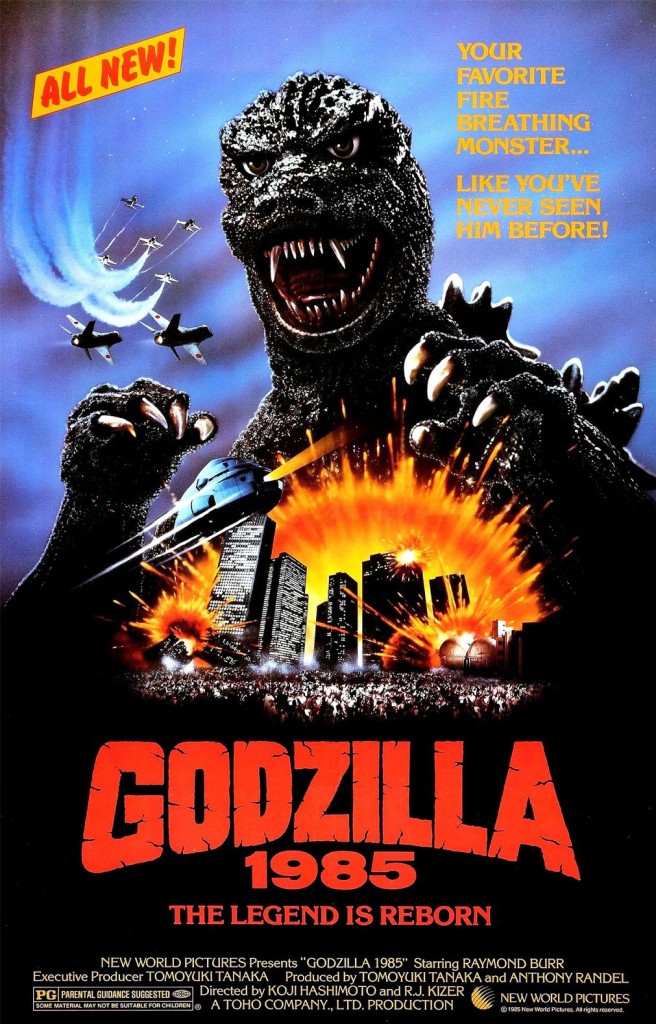
Like Gojira in 1954, Return of Godzilla was also re-edited for American audiences to include footage of white people, because no one knows what would happen if Americans had to watch a movie without white people in it, and for sure, nobody wants to find out. In the case of the original film, the American version became known as Godzilla: King of the Monsters, and in the case of Return of Godzilla, the American version is called Godzilla 1985. In both cases, the special Caucasian-ified American version features celebrated actor Raymond Burr as a journalist named Steve Martin, but to what degree this new footage is imposed on the original, and what effect that has on the film as a whole, could not be more different in Godzilla 1985 than it was in King of the Monsters. We do lose some of the nuclear paranoia, but we still fair MUCH better this time around.
While still a classic film, Godzilla: King of the Monsters was clearly inferior to it’s Japanese sibling, which already had excellent characters and compelling drama BEFORE we crammed in a bunch of white folks. In that case, the addition of Raymond Burr’s character only distanced the audience from the real story, and that softened the film’s impact a great deal. With Godzilla 1985, though, I don’t think this is the case at all. This time around we still spend ample time in Japan with our original characters, and their stories and relationships are not so badly cheated in the same way. Additionally, Raymond Burr adds a special connection to the first film, even if he wasn’t in Gojira we know he was in King of the Monsters, and his character is very well written and acted this time around. The best thing this Westernized version does, however, is that it expands Godzilla’s presence to a global level much better than the Japanese one does. In this version, the Americans learn about Godzilla much sooner, and we come to learn that they are every bit as stressed out about it as the Japanese are, which really elevates the tension. I may be committing some weird form of Godzilla treason here, but I actually like the American version better for exactly these reasons. And Burr is kicking out the Jams, too.
Regardless of which version you see, however, this is a nice entry in the series, and a great way to jumpstart a new slew of giant, monster clobbering adventures. Many of the effects have not held up well for their age, but they shouldn’t slow you down too much, it’s still plenty enjoyable for the seasoned Toho fan.
B-
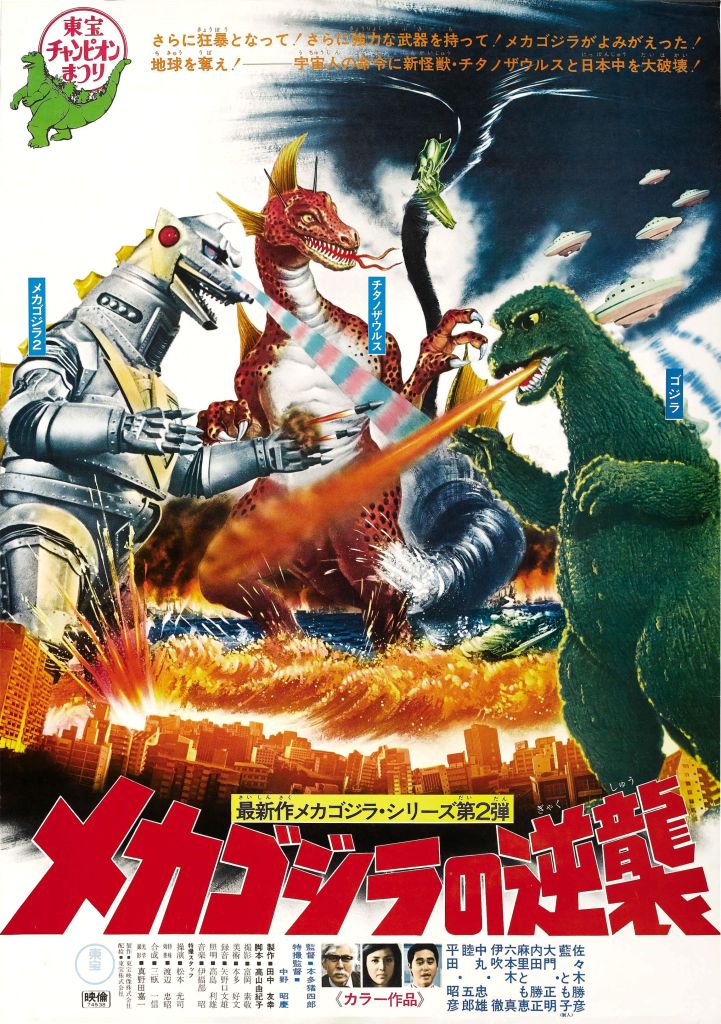


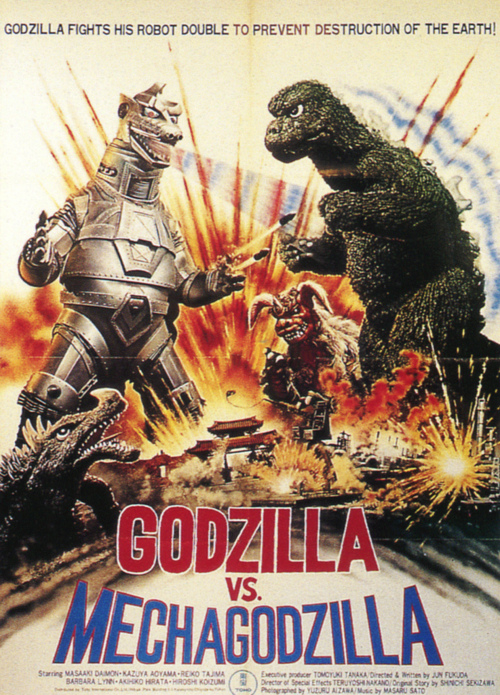

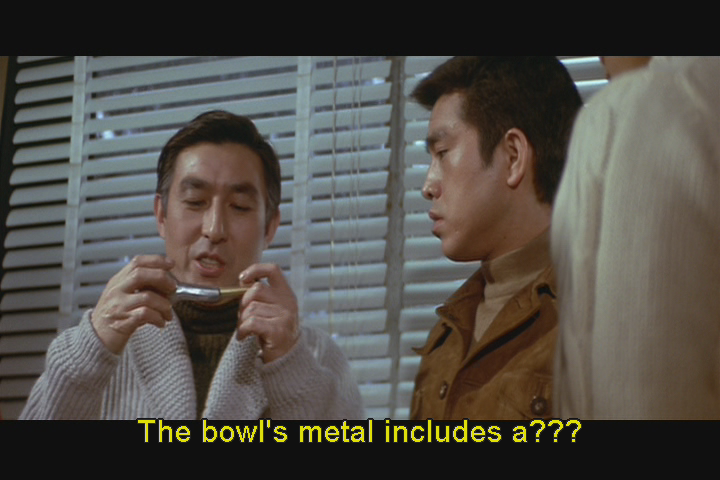
 Holy smokes! Another Godzilla shows up! The Japanese people’s collective mind is blown. After a short throw down between the two warring twin Godzillas, we discover the truth, the first Godzilla was a mechanized imposter, a robotic replica of Godzilla, who was coated in a false skin, not unlike Arnold Schwarzenegger in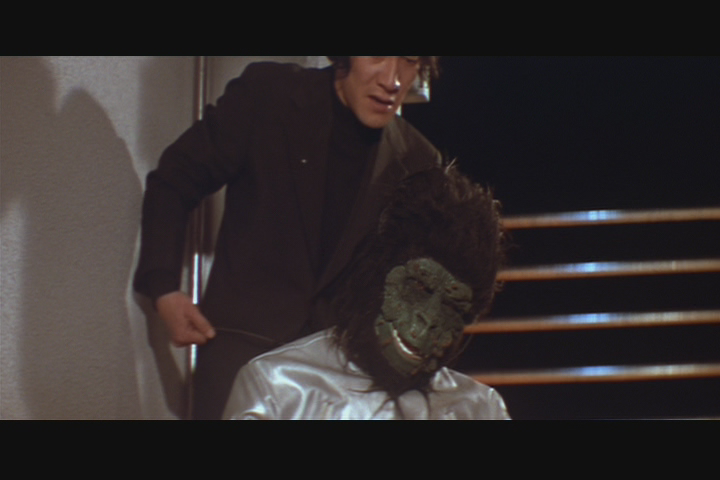
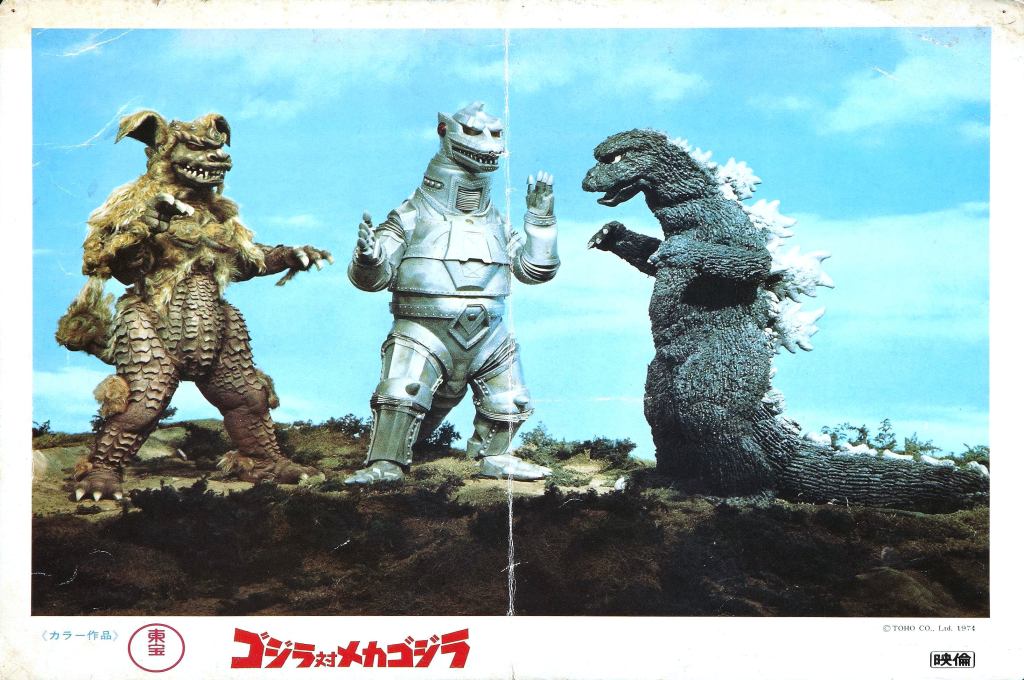
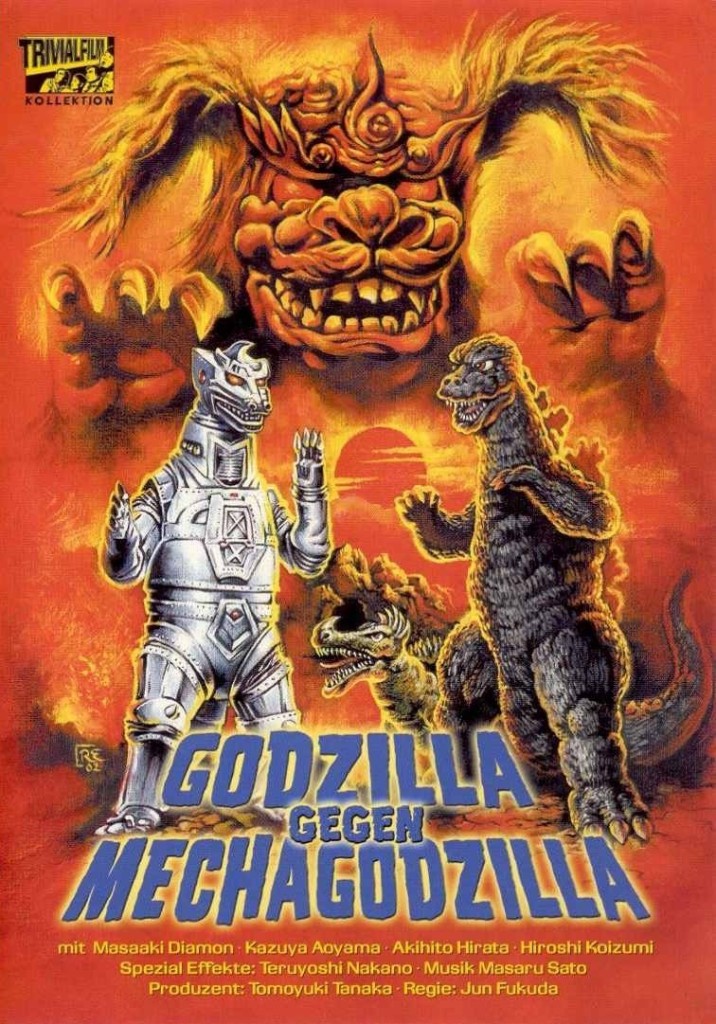
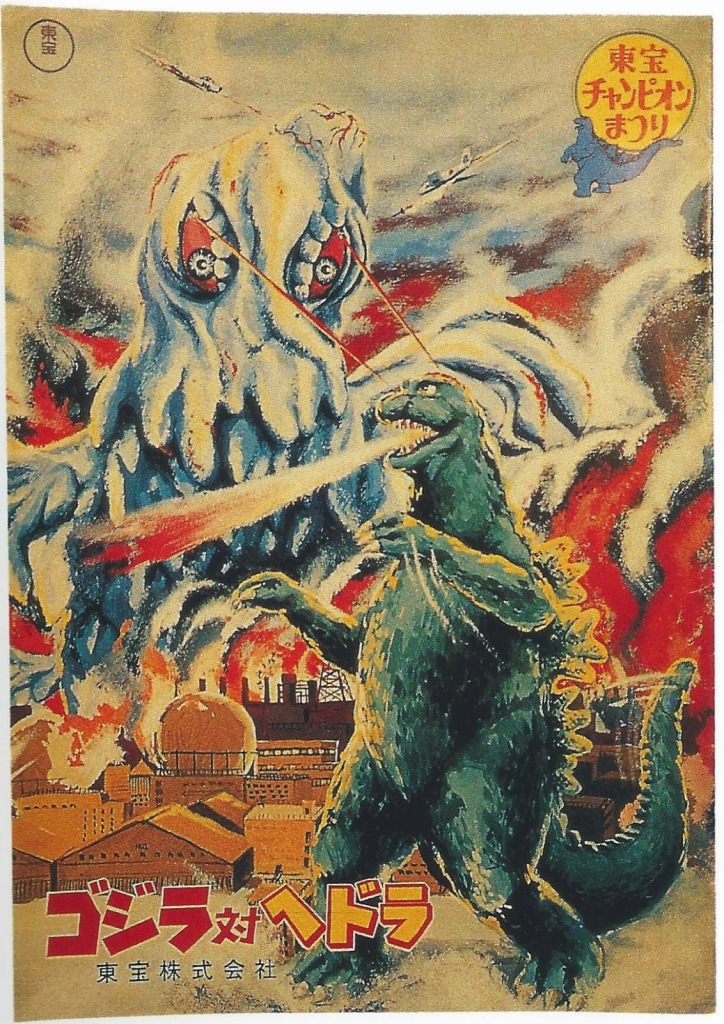
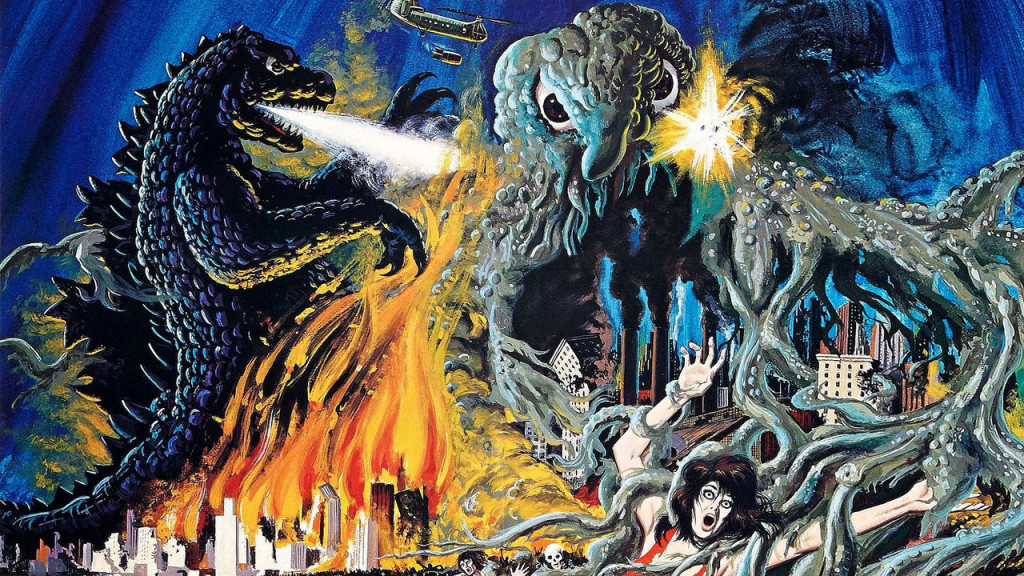
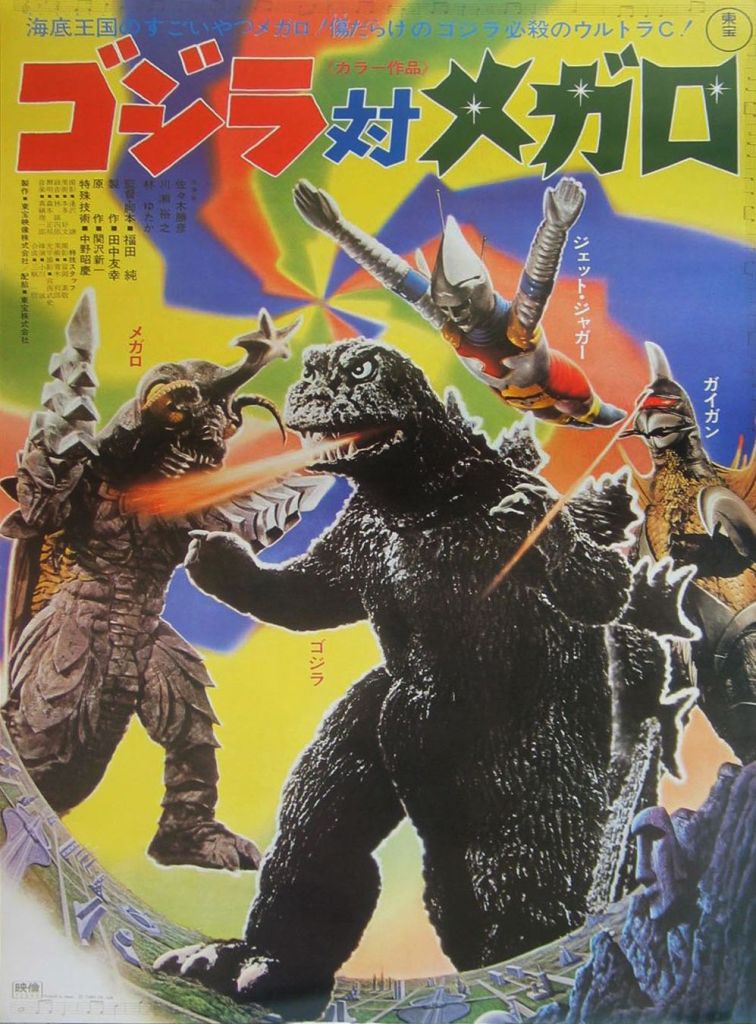 Even the poster is lame.
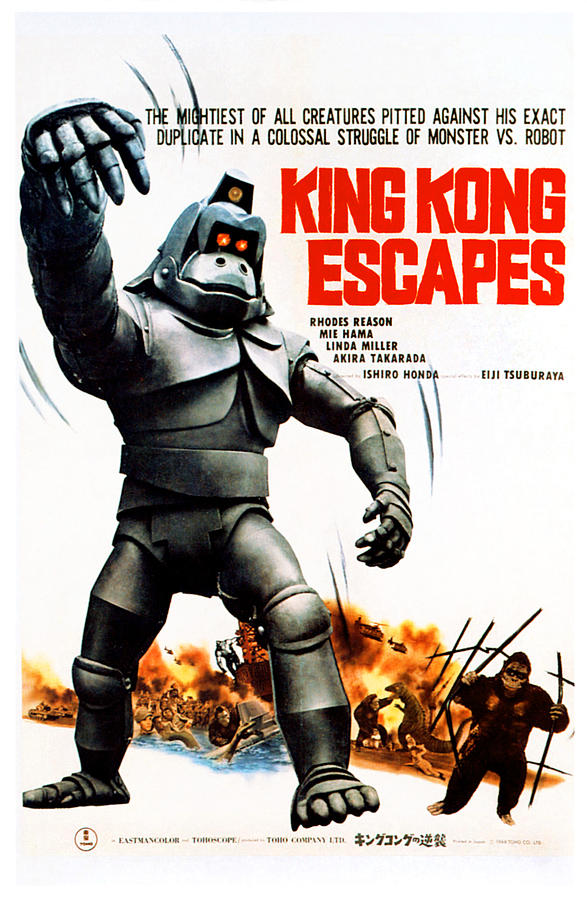
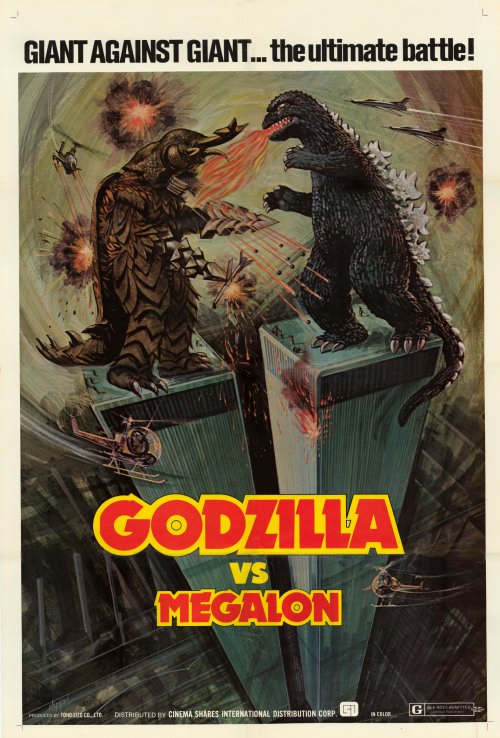 THAT’S a poster.
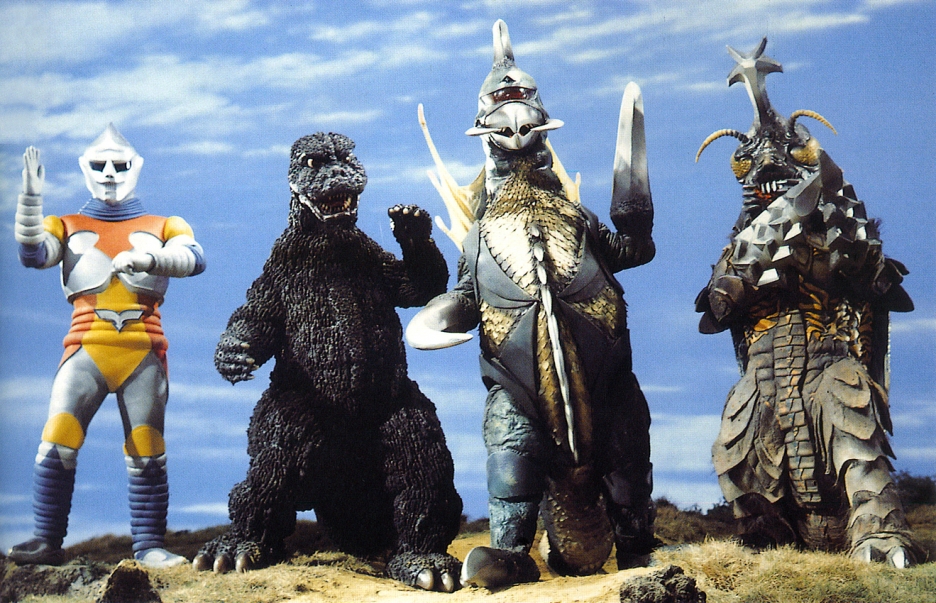 GODZILLA- Just a big ol’ softy. In this one, Godzilla’s head has been redesigned,
 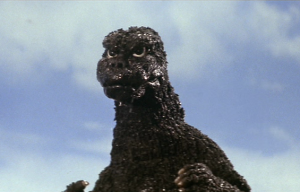 his eyes are much larger, and more frontal, which gives him a more humanoid and friendly appearance. Godzilla also observes different human customs, such as the shaking of hands, and feeling insulted when Megalon taunts him with his weird monster butt-slap dance. Things were getting a little Gamera by this point.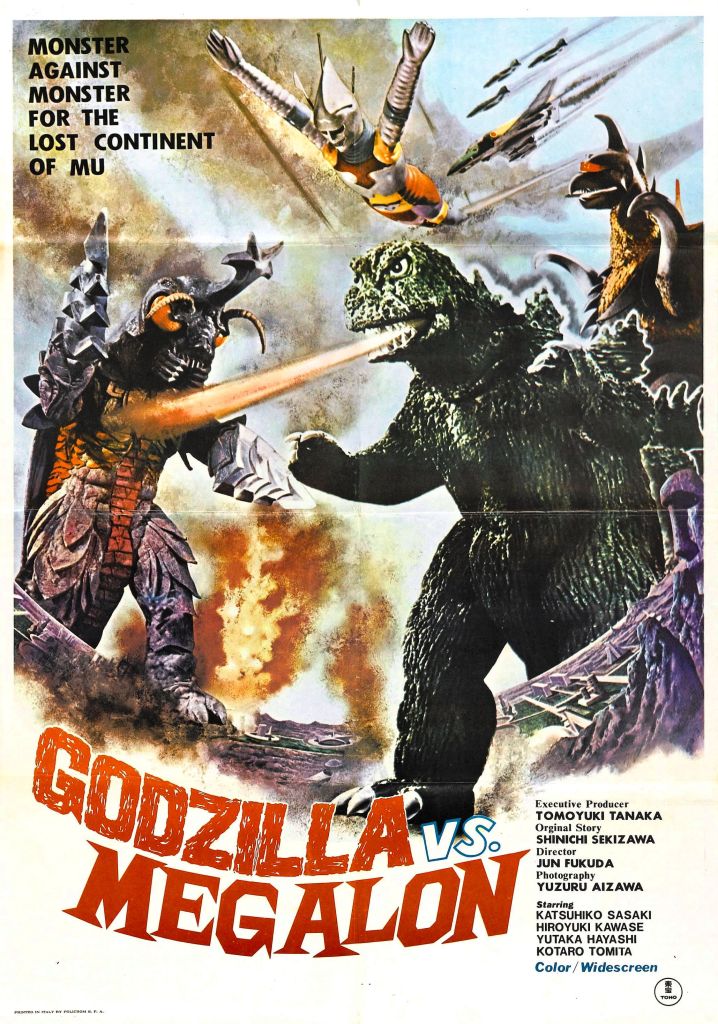
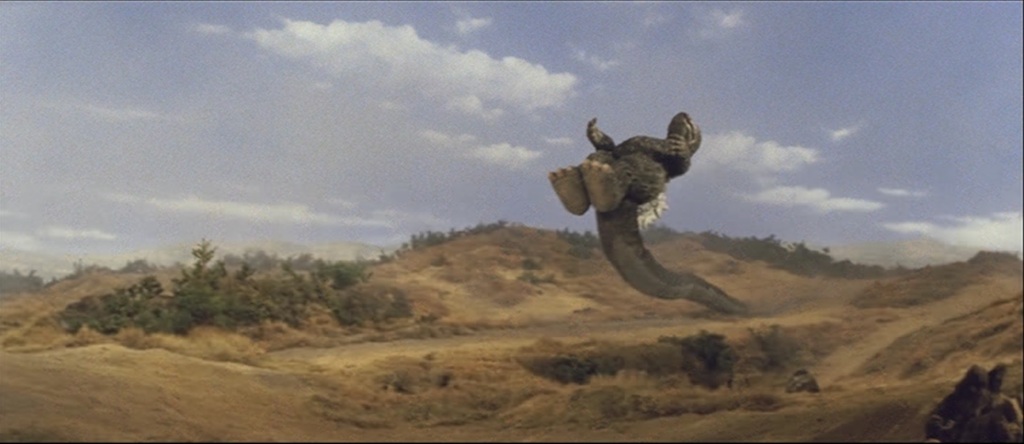

 Once a towering, insurmountable force for death and destruction destined to blanket the Earth in grim darkness, fire and blood, Godzilla is now totally cool and nice, you guys. Not only is he no longer a bad guy, but in Godzilla VS Gigan, he’s a damn underdog. Most Godzilla films portray him as an unstoppable, scaly juggernaut, the unbeatable conclusion to any conflict, but in GVG it kinda seems like his monstrous snout has finally bit off more than it can chew. He really takes a lot of abuse this time around, including, at one point, a full on Ghidoriah lightning bolt attack to his dragon balls. Rough. (NOTE: Apparently, this shot is actually recycled footage from Ghidorah: The Three Headed Monster. So, apparently this has happened to Godzilla twice now!)
 Anguirus has also come a long way from being Godzilla’s most hated rival to the sturdy, dependable, four legged BFF we see in GVG. Now he’s like, the “solid dude” of the kaiju kingdom, Anguirus is the monster who would come over to help you move. I mean, he’s a quadruped, with no apparent dragon breath or laser eyes, so his offensive capabilities are pretty much limited to biting and just being spiky, but he’s still out there in the fray, taking his lumps and doing what he can to back up his bros. If Godzilla seems like the underdog in this battle, Anguirus is straight outclassed, and you might find yourself worried about the little guy. I know I was!
 What is Ghidorah the king of, anyway? Pissing me off, that’s what. Anytime aliens pop in, they summon Ghidorah from the cold recesses of space to shriek, fly around, wiggle his three heads and barf lightning at everybody. GVG is no different, which proves just how successful his outer-space Craig’s List ads are.
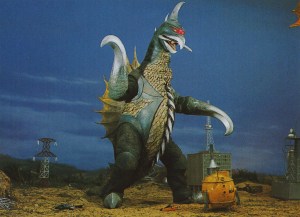 This guy is the big addition to GVG. Gigan is basically like, the Boba Fett of the Kaiju world. He’s a cypher, he has no purpose and no drive of his own, he’s here to do his job; kill monsters and bust shit up. He’s like a giant monster hit man, hired on by aliens to dish out the death, because truly, that is what he was made to do. This damn thing has no hope of ever living a normal life, and that is by design. Every limb he has ends in a straight up blade, his face alone has four different slicers poking out, and his fucking belly has a fully functioning buzz saw embedded in it. The only means of manipulating an object that Gigan has is to slice the hell out of it, even just picking something up is out of the question unless it can also be impaled in the process. He is super cool, though.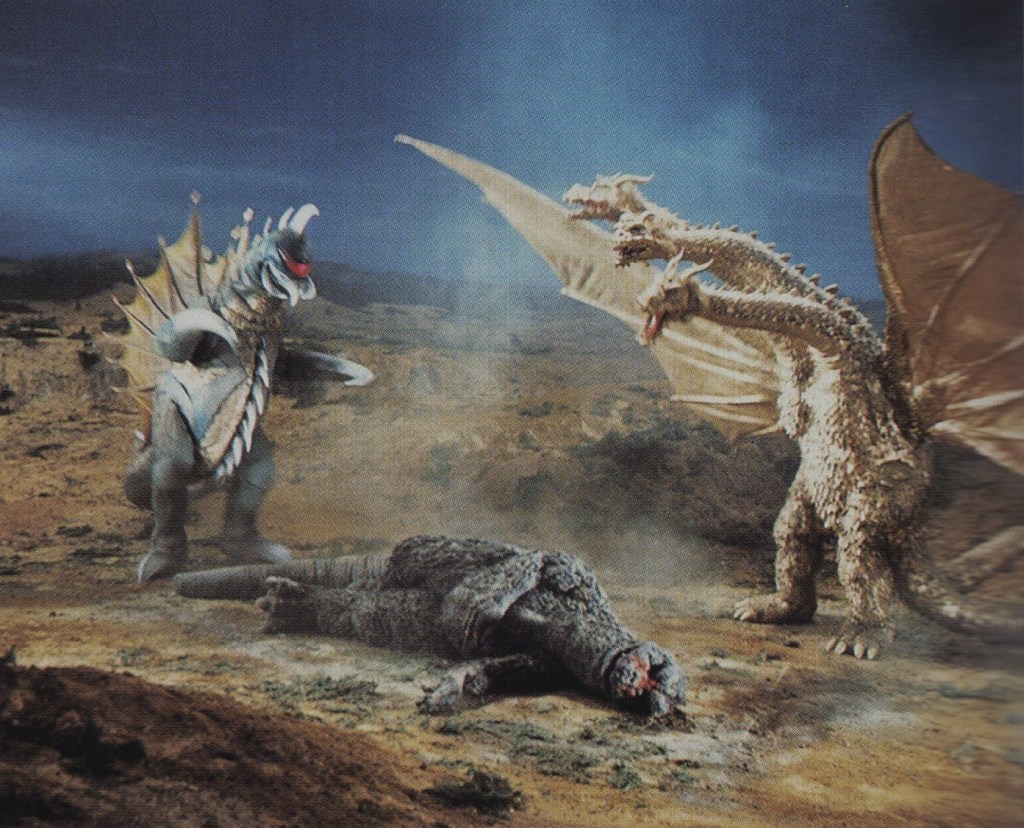
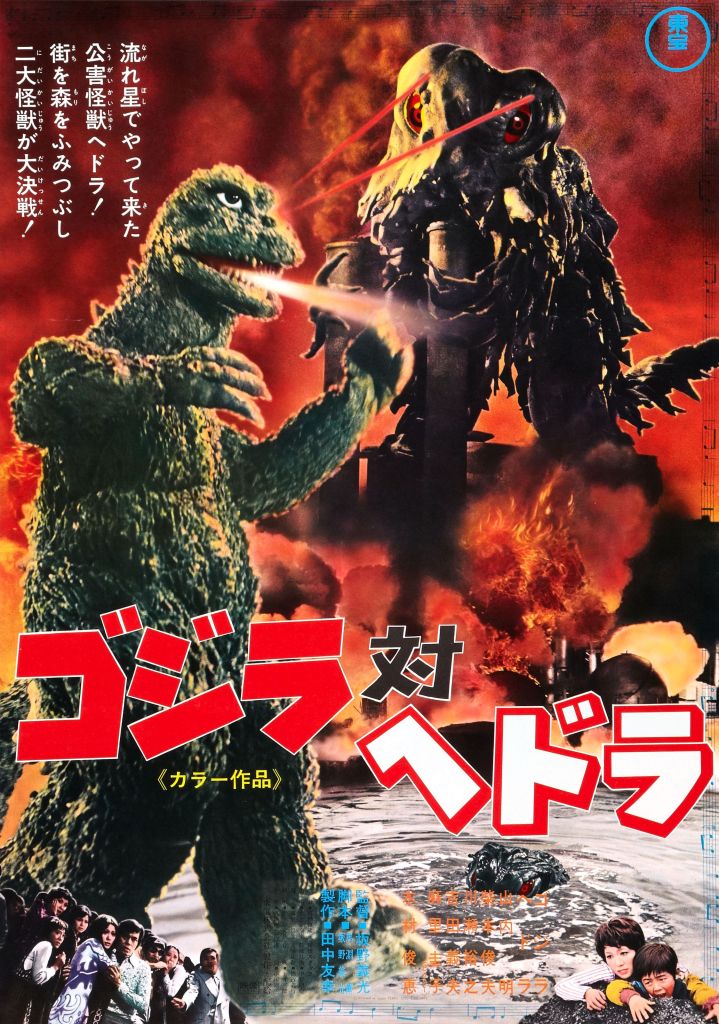
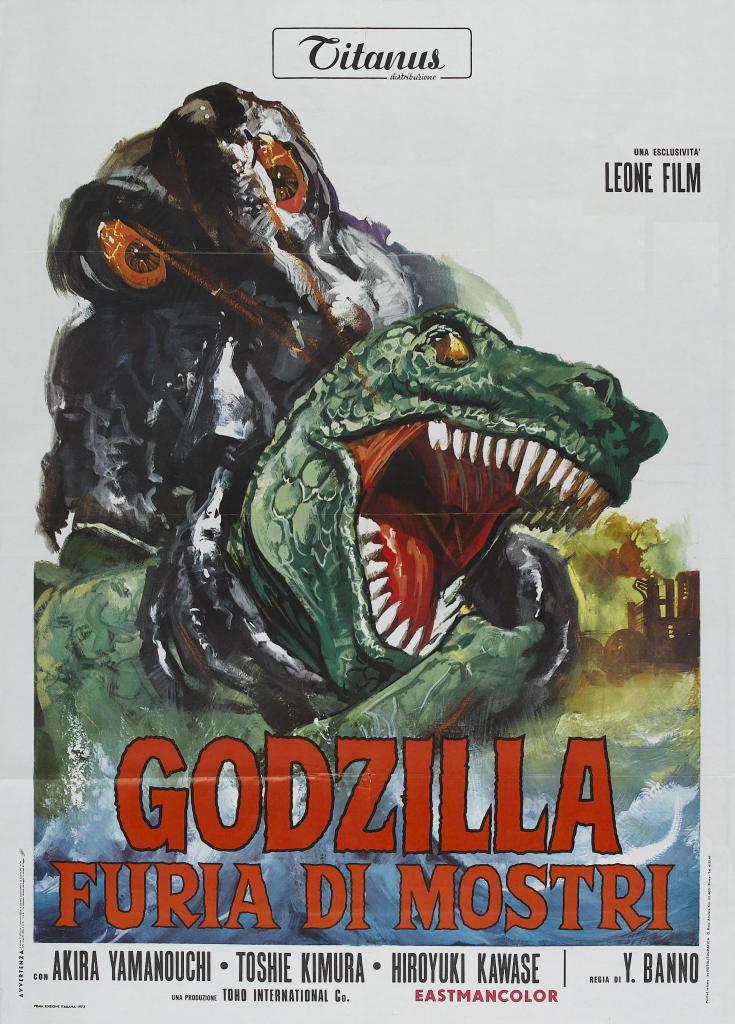
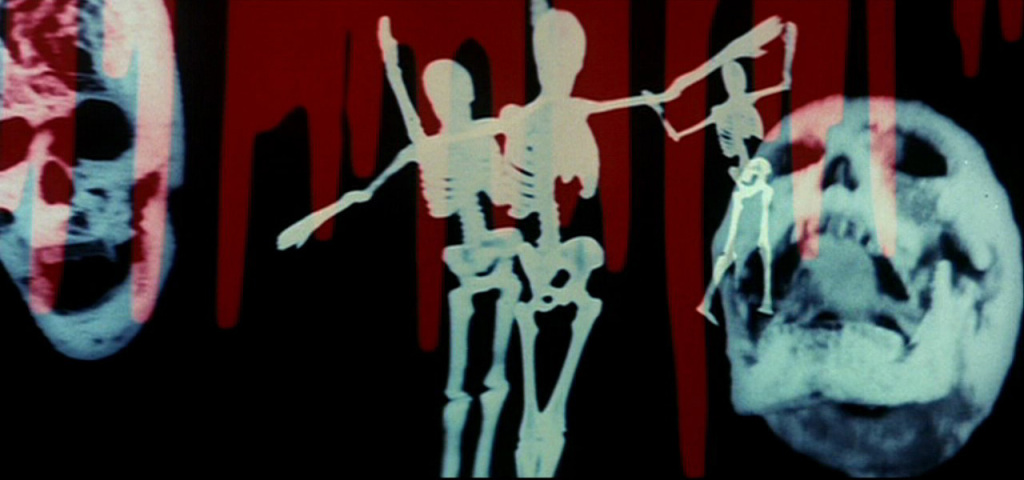
 n, he’s playing with Godzilla toys in his backyard. Throughout the film he claims to have dreams and premonitions of Godzilla rising up out of the sea to rescue mankind from Hedorah, who has evolved into a biped with the ability to fly, and has decimated Tokyo, leaving many dead. The film is presented in a strange, almost dreamlike manner, inter-cutting jazzy 70’s split-screen techniques, frightening hallucination/dream sequences, and even occasional short animated sequences, which really lends credibility to the idea that this film could actually just be Ken’s fantasy. Perhaps we never really leave the backyard and Ken’s clunky, plastic monster dolls are playing out the events of Godzilla VS Hedorah for us. While the movie certainly presents itself as being cannon, there is enough here to justify the “child’s fantasy” idea, and the movie is open ended enough, if you want it to be. Several important monster related plot points are triggered by Ken’s “visions”, and these sometimes carry an odd imaginative feel, such as when Ken claims to spot Godzilla lurking unseen by anyone else amongst the city’s skyline while riding a roller coaster.
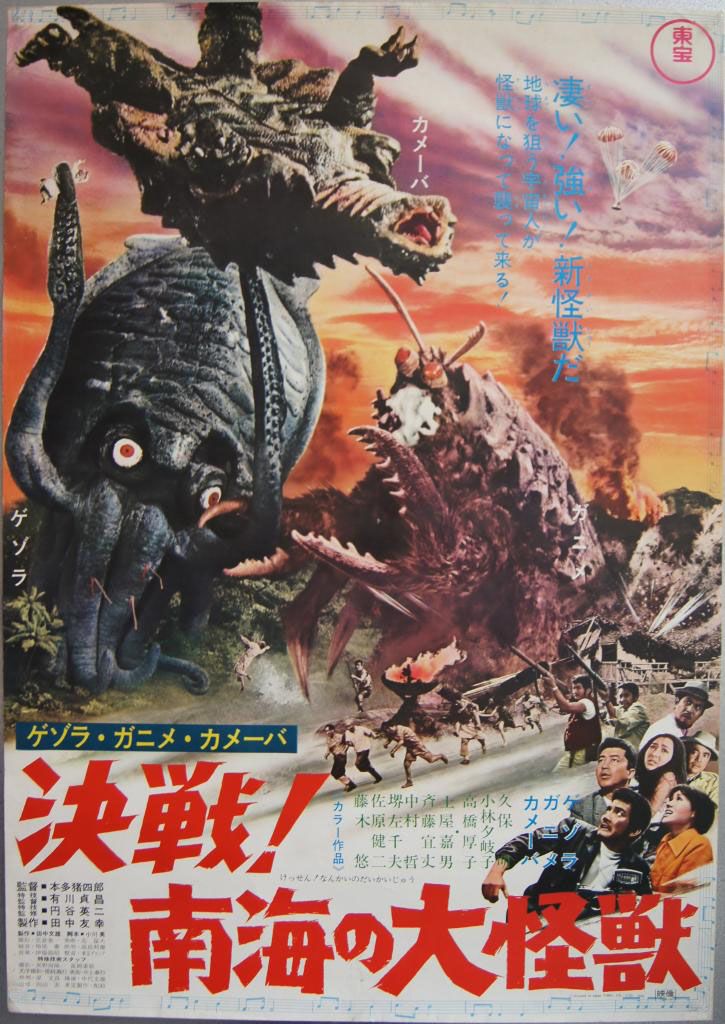
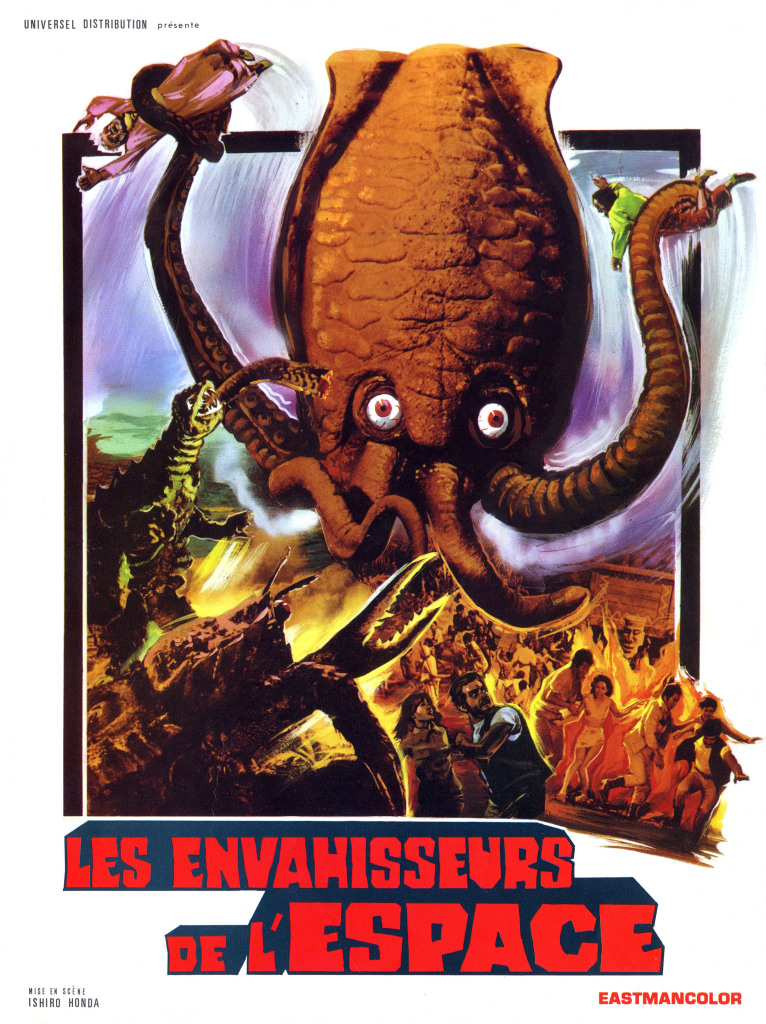
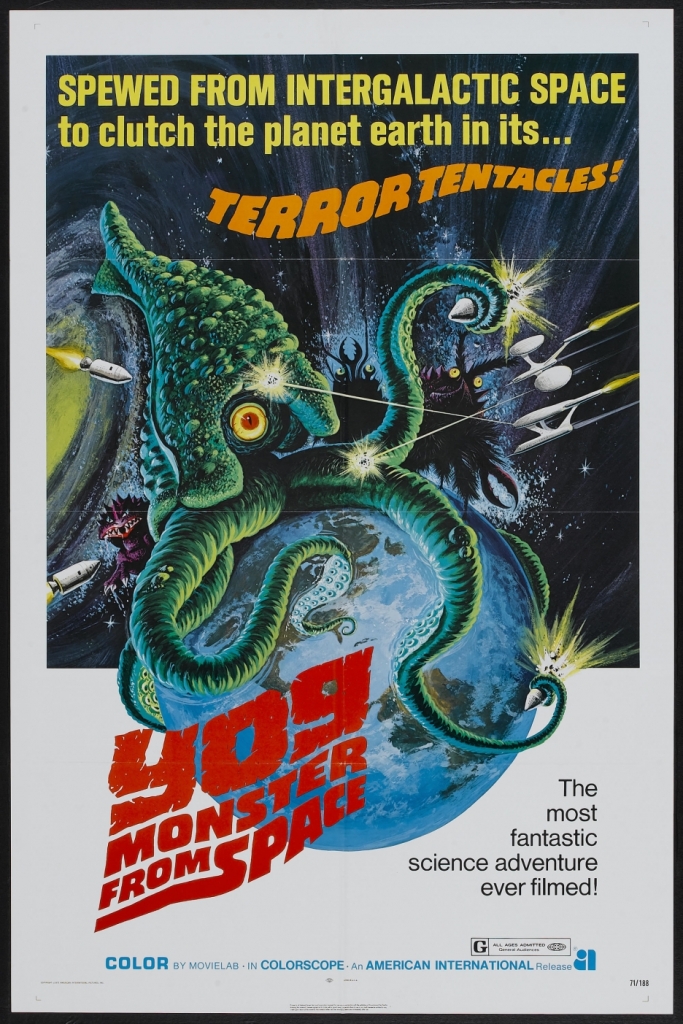
 Space Amoeba feels a little cheap, too, almost like they had a few extra reels of film and a bunch of unused monster suits so they decided to squeeze out one more movie before going back to the producers for more funds. I think this one might be for completest only, it’s too difficult to obtain to warrant a viewing for casual Zilla fans.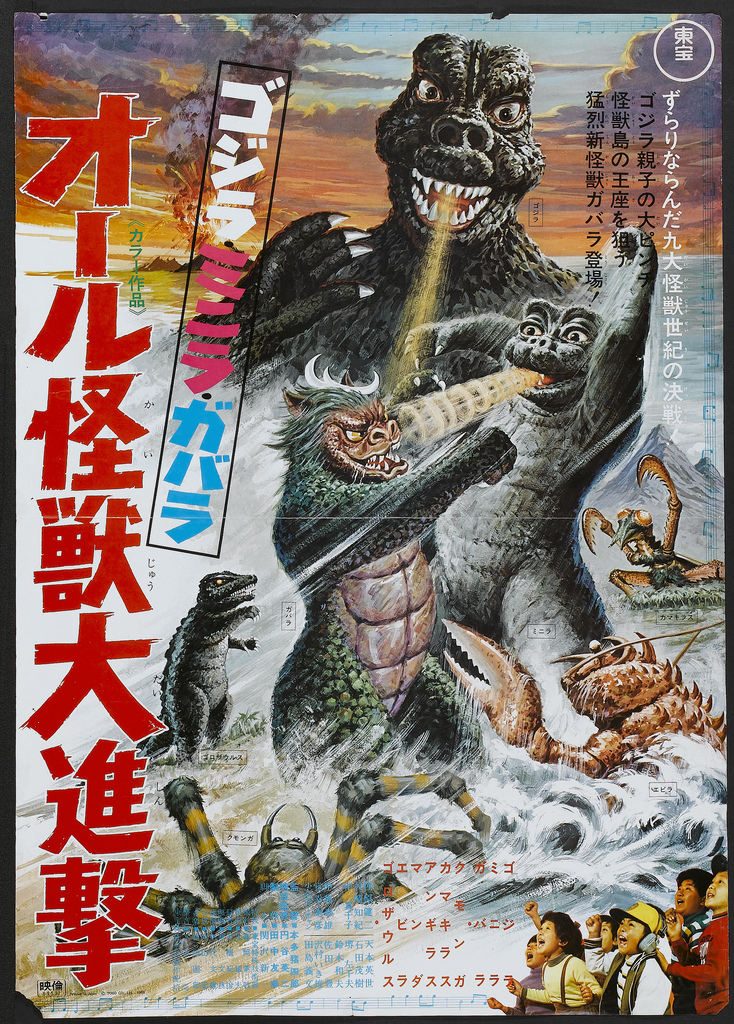

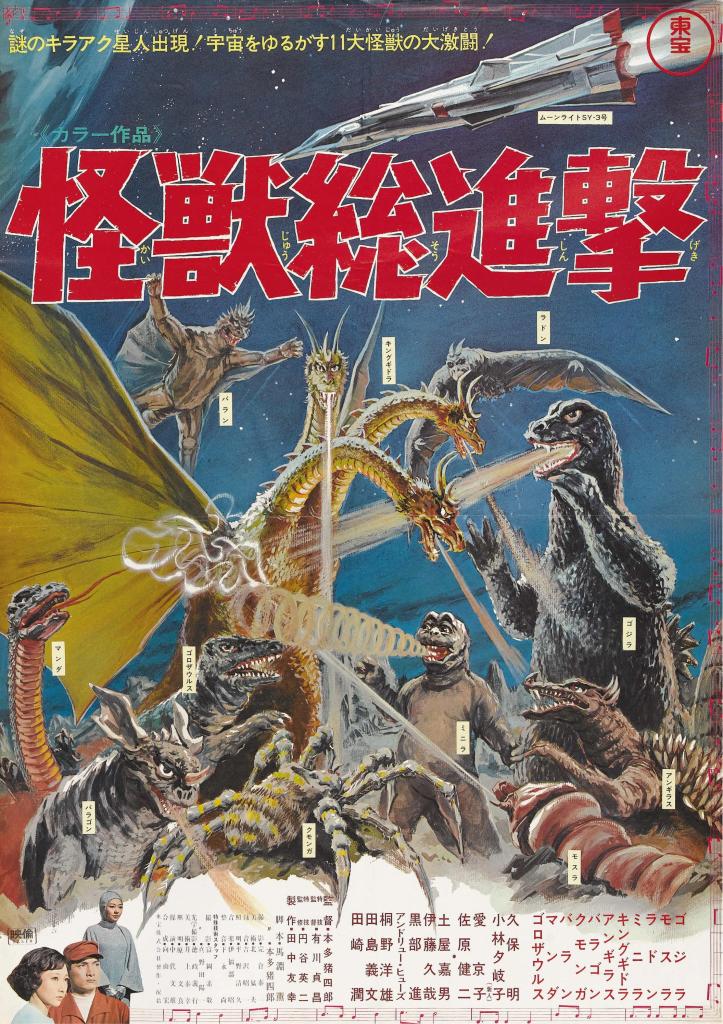
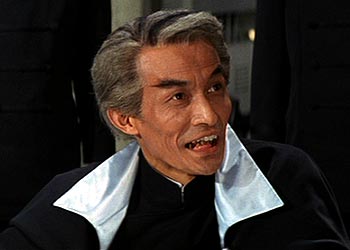 Your teeth are gross, dude.
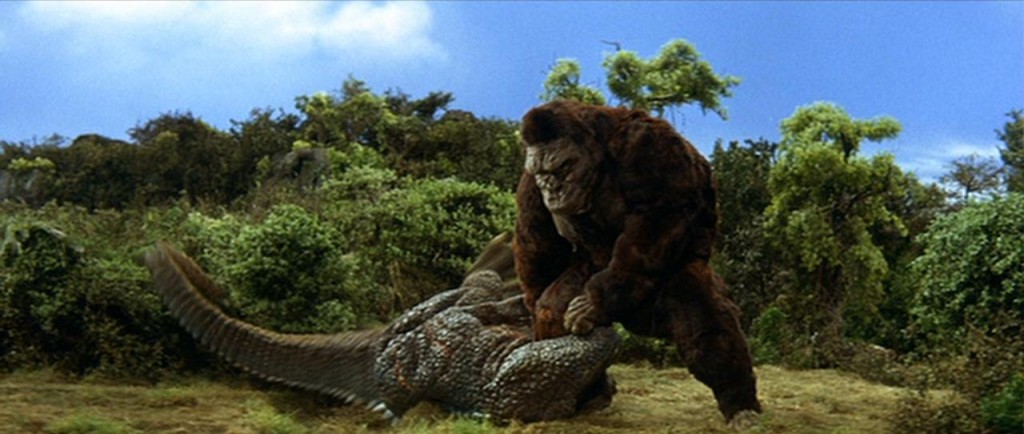
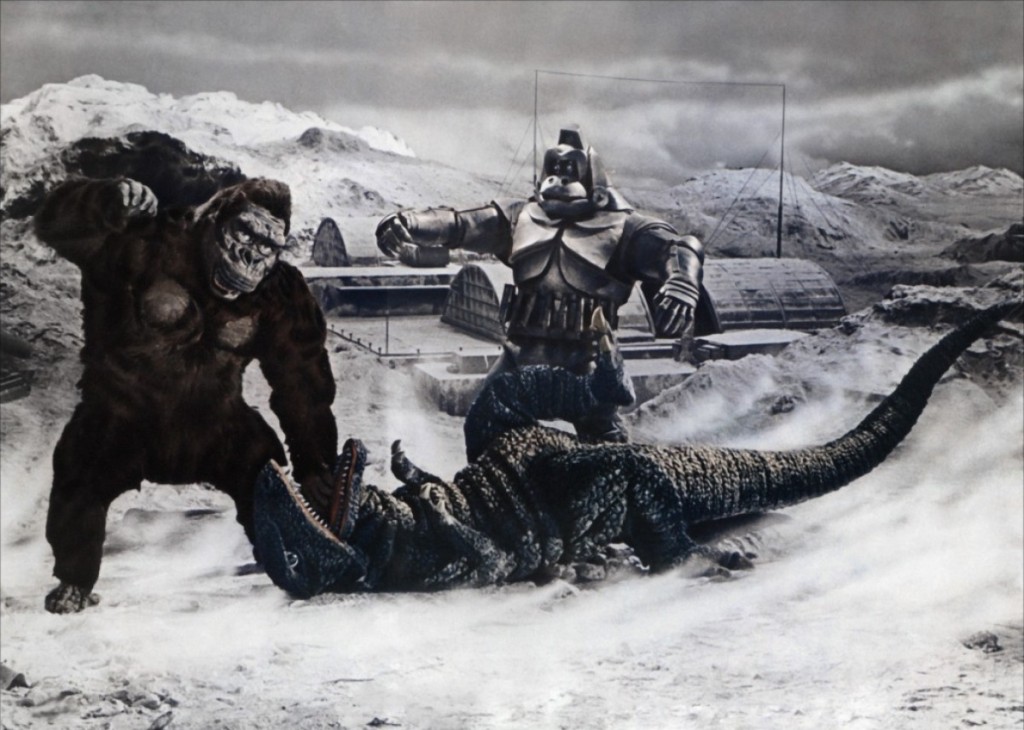 Also, this scene never actually happens in the movie, and that is inexcusable.
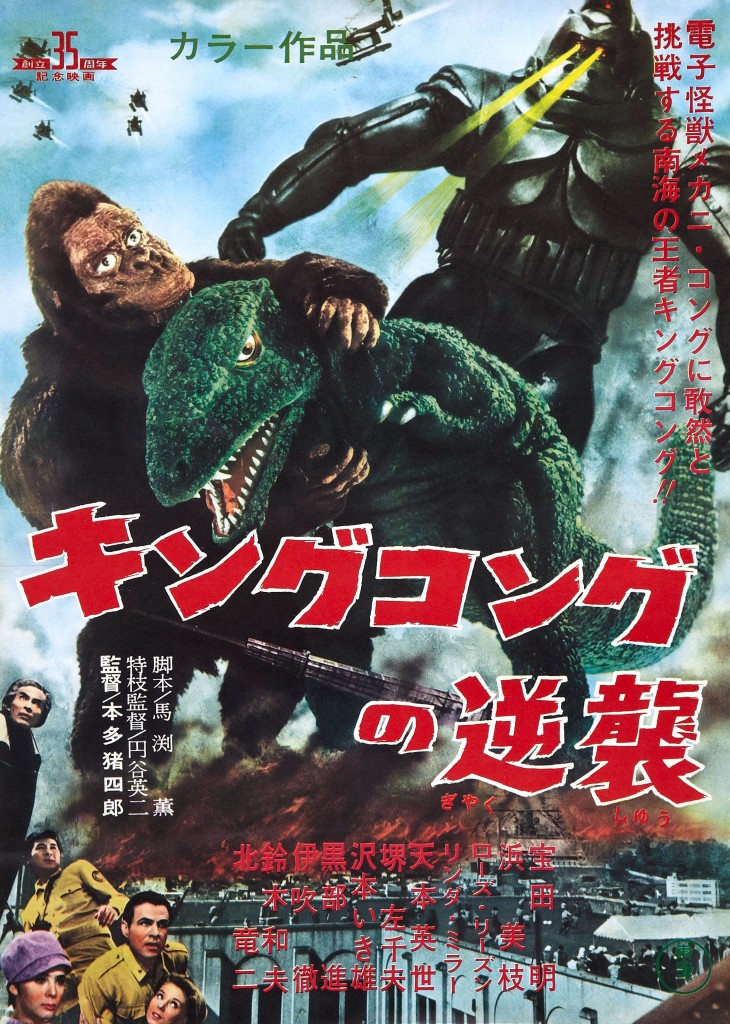
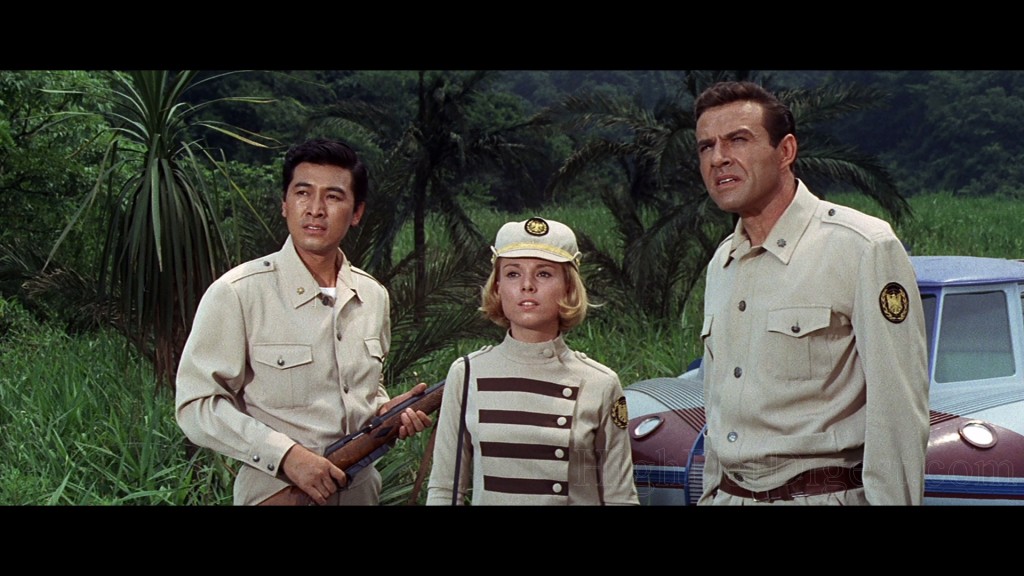
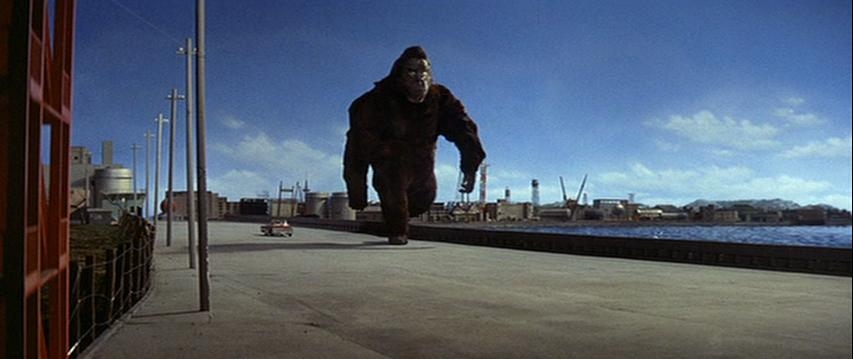 If I were to point out any downsides to King Long Escapes, I guess I could say that perhaps the biggest problem with the film is it’s portrayal of Lieutenant Susan Watson, a whimpering, simple-minded female and potential future bride to a towering Javanese ape monster, who is herself essentially helpless. Toho, on average, was actually markedly less sexist than most studios back in this golden age of monster cinema, but with King Kong Escapes, they certainly muddy their track record. It’s weird, all the Godzilla films are all littered with strong, intelligent female characters, both as protagonists and antagonists, but this movie is a major departure from that progressive attitude. This therefore begs the question; is this 180 specifically meant to be a slam on American women? Watson is, I believe, our first white, American woman to have a major role in one of these films, is her race or nationality the reason she’s been painted in such an unflattering light? Or could it be a result of Toho’s effort to replicate the feel of RKO’s original